
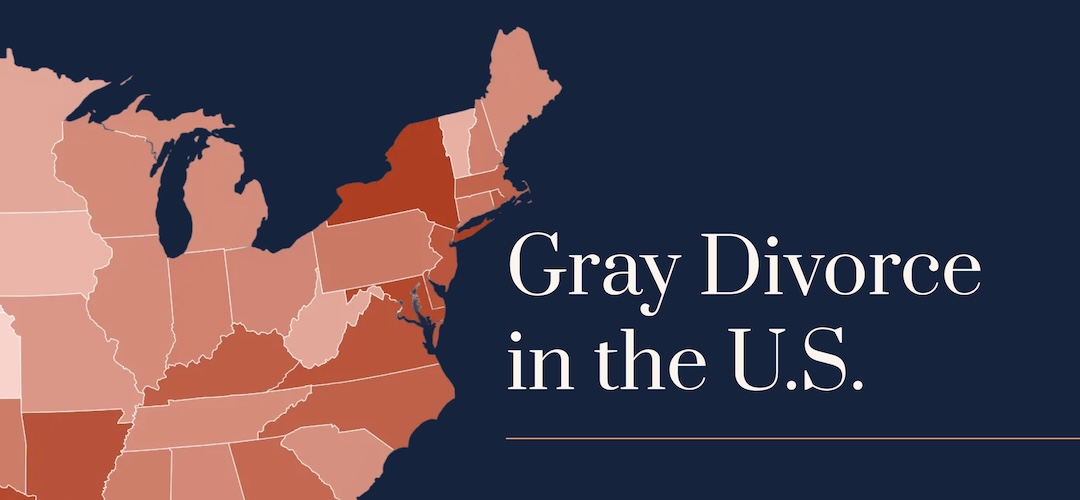
For much of the 20th century, divorce in the U.S. was fault-based, meaning a spouse had to prove infidelity or abuse of some kind to justify a split from their partner. It was not until 1969 that California became the first state to enact a no-fault divorce law, allowing couples to separate based on irreconcilable differences rather than proving specific wrongdoing. Over the next two decades, nearly every state followed a similar path.
Even so, divorce was heavily stigmatized for a long time and was seen as a failure to be ashamed of. Fear of judgment and the potential loss of social standing, family ties, and religious belonging kept many couples together despite living in unfulfilling relationships. Moreover, women largely depended on men financially, so independent pursuits were often not an option. Many considered marriage a social and economic partnership. If the home life was functional, there was little reason to think of leaving.
As these legal and social barriers weakened, the meaning of marriage began to change as well. Longer life expectancy, greater financial independence, and shifting expectations around emotional fulfillment have reshaped how people view long-term relationships. For many, staying together is no longer seen as an obligation. Now, people are more likely to consistently consider their personal happiness and fulfillment, and take action to meet such goals.
This shift has encouraged the rise of gray divorce: the divorce of individuals aged 50 and older.
While this trend is ongoing and continues to be shaped by a variety of social, economic, and cultural factors, the pattern of gray divorce varies across the country. To explore these differences, Contreras Law Firm partnered with data visualization firm 1Point21 Interactive to study the top states for gray divorce in the United States.
This analysis was done by calculating a composite score that considers the volume, share, and rate of gray divorce, using population-weighted survey data from the U.S. Census American Community Survey via IPUMS. The analysis covers the years 2021 to 2024 to provide a more current picture of gray divorce across the country.
Read on to uncover our findings.
Key Takeaways
- Gray divorces have risen by roughly 5% between 2015 and 2024. When considering their share among all divorces, the share of gray divorce has risen by approximately 19% in the same time period.
- California was the top state for gray divorce when volume, share, and rate are considered together. It recorded a yearly average of over 78,000 gray divorces, a rate of approximately 654 gray divorces per 100,000 adults ever married, and a share of roughly 42%.
- Arkansas had the highest gray divorce rate in the country. Ranked 7th overall, it recorded about 884 divorces per 100,000 adults ever married, which is 36% higher than the national average.
- South Dakota had the lowest gray divorce rate in the country. Ranked last overall, it recorded about 460 divorces per 100,000 adults ever married, which is 29% lower than the national average.
- Rhode Island had the highest share of gray divorces. Ranked 11th overall, nearly half of all divorces in the state, about 48%, occurred between individuals aged 50 and older.
Gray Divorce Over a Decade
In absolute counts, gray divorces, divorces among individuals aged 50 and older, increased by 5.19% between 2014 and 2025.
In contrast, all younger age groups experienced declines: under 30 decreased by 42.45%, ages 30–39 decreased by 19.07%, and ages 40–49 decreased by 10.86%.
SInce absolute counts are influenced by the size of each age group and overall marriage trends, examining the share of divorces by age group over time provides a clearer picture of how the distribution is shifting. The graph below illustrates how these age groups are becoming more or less represented among divorces, independent of changes in population or marriage rates.
Individuals aged 50 and older now account for a larger portion, with their share rising 19.01% between 2015 and 2024. Ending relationships that are unsatisfying or harmful is becoming more common in the search for a more fulfilling life. Furthermore, research shows that women in this age group are more likely to initiate divorce. With greater financial independence than past generations, many Baby Boomer women now have the opportunity to make this choice.
Those aged 40–49 experienced only a modest increase of 1%. Meanwhile, younger age groups are making up less of all divorces: the share for ages 30–39 fell by 8.44%, and for those under 30, it dropped by 34.88% during the study period.
Top States for Gray Divorce
The composite score reflects how prominently gray divorce appears within each state when volume, share, and population-adjusted rates are considered together. States near the top of the ranking tend to score highly on more than one of these measures, but states may reach similar rankings for different reasons.
From 2021 to 2024, California and Florida recorded the highest yearly averages of adults aged 50 and older divorcing, with an estimated 78,500 and 60,200 gray divorces per year, respectively. Additionally, in both states, people 50 and older made up more than four in ten of all divorcees.
California has actually recently implemented a law that expands access to low-cost, streamlined divorce beginning in January 2026. The law allows couples who agree on terms to file for $435, rather than navigating the standard court process that averages $17,500. By lowering the financial and procedural barriers to divorce, the policy may make it easier for some long-married couples, including those later in life, to move forward once they have decided to separate.
Some small states stand out with gray divorce being especially common once population size is taken into account. Arkansas, North Dakota, Delaware, and Nevada all report gray divorce rates of roughly 800 or more per 100,000 ever-married adults ages 50 and older. In these states, older adults also make up proportions above the average national share of 37.79%.
New York, Maryland, Texas, Virginia, and New Jersey all rank in the top ten on the composite ranking, though for different reasons. New York and New Jersey, for example, have some of the highest shares of divorcees who are 50 or older, with shares over 45%. Meanwhile, Texas has a share below average, but the second largest total, with about 62,442 gray divorces a year.
Alaska, Utah, Kansas, Nebraska, and South Dakota sit at the bottom of the composite ranking, with both lower rates and smaller shares of older adults among those divorcing. In Utah, for example, about one in four people divorcing is 50 or older, one of the lowest proportions in the country. In these states, divorce remains more concentrated among younger adults.
Utah has one of the youngest populations in the country and large communities with strong family and religious norms that promote marriage continuity. Marriages in Utah also tend to start earlier in life, meaning that when divorces do occur, they are more likely to happen before individuals reach age 50.
Gray Divorce Rates Compared to the National Average
The chart below visualizes the rates from the composite ranking table relative to the national average. These percent differences make it easy to see which states have gray divorce rates that are unusually high or unusually low.
The average divorce rate in the U.S. is approximately 648 gray divorces per 100,000 adults ever-married. By state, percent differences from the national average range from approximately −29.10% in South Dakota to +36.28% in Arkansas.
The following states exhibit gray divorce rates that are at least 15% above the national average, representing the most notable positive deviations:
- Arkansas (36.28%)
- North Dakota (31.69%)
- Delaware (23.73%)
- Nevada (23.73%)
- Kentucky (21.33%)
- Maryland (21.06%)
- Oklahoma (15.42%)
The following states fall at least 15% below the national average, representing the most substantial negative deviations from the expected gray divorce rate:
- South Dakota (-29.10%)
- Kansas (-25.89%)
- Nebraska (-25.48%)
- Vermont (-21.57%)
- Iowa (-17.77%)
- Minnesota (-16.99%)
- Michigan (-15.36%)
Methodology
We analyzed ten years of U.S. Census American Community Survey data via IPUMS from 2015 to 2024 to examine how the share of divorces varies by age group each year. We defined “gray divorce” as divorces among individuals aged 50 and older and identified cases using the ACS variable indicating respondents who were divorced in the last year.
For the composite state ranking, we focused on the years 2021 through 2024 to reflect more recent, post-pandemic patterns in gray divorce. The composite score is an index combining the yearly average number, share, and rate per 100,000 adults ever married for gray divorce. “Ever-married adults” include individuals age 15 and older who have been married at any point and are still living. All estimates use IPUMS person weights to ensure national representativeness.
Fair Use Statement
If you found our findings interesting, you are welcome to share them. Please include a link back to this page so readers can access the full study and methodology.